India · June 2026
More than a qualification. A full immersion in yoga.
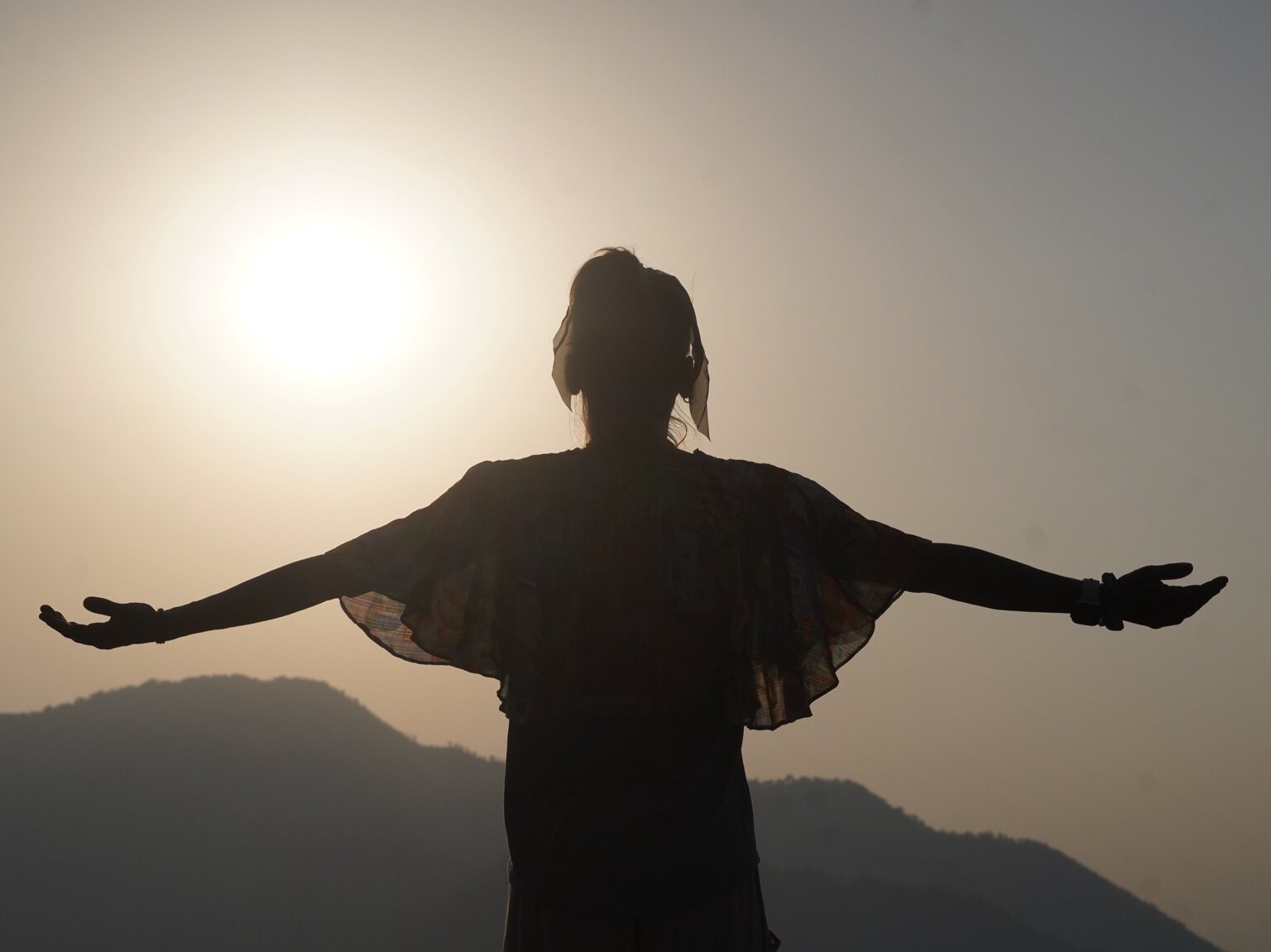
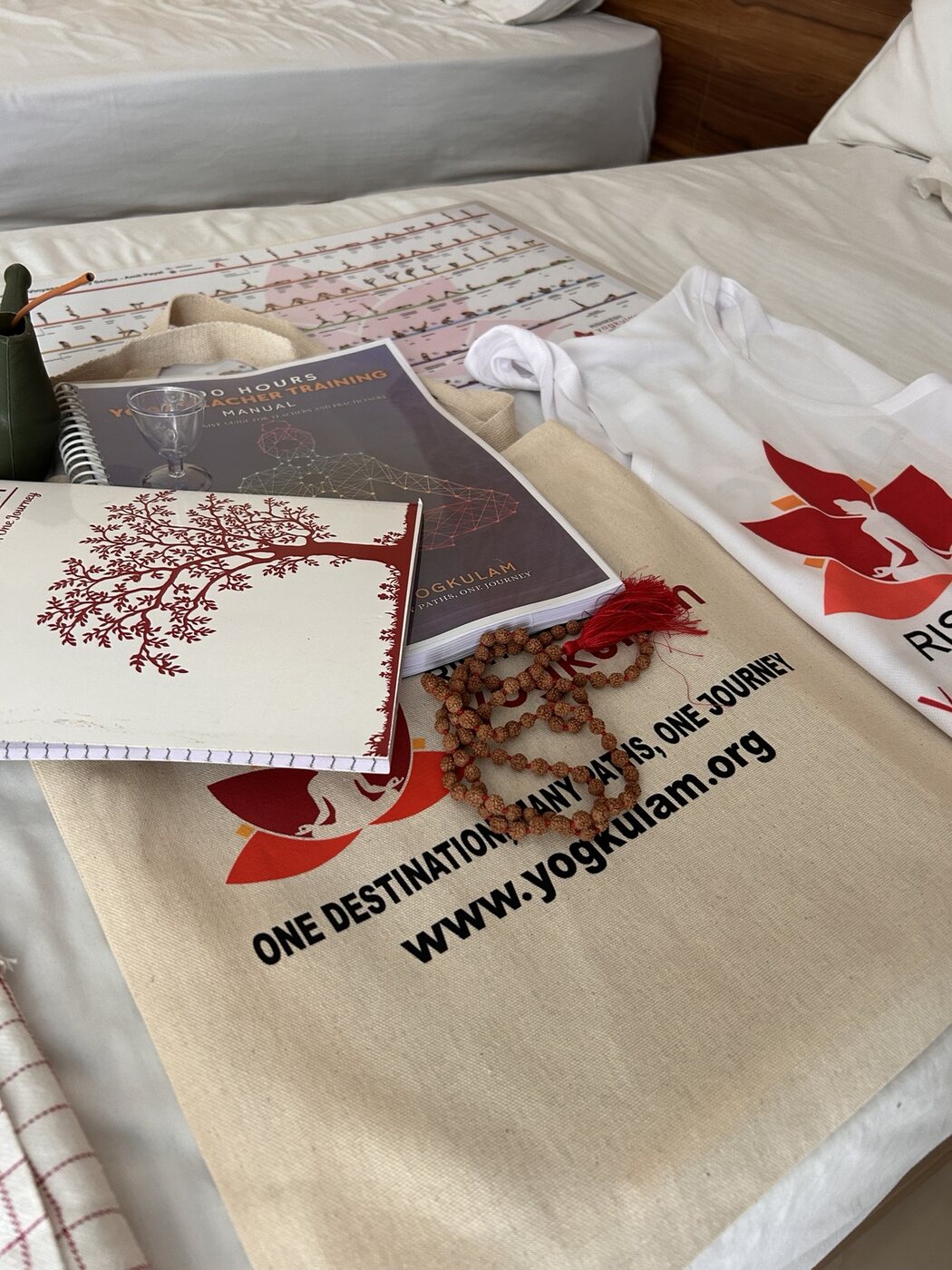
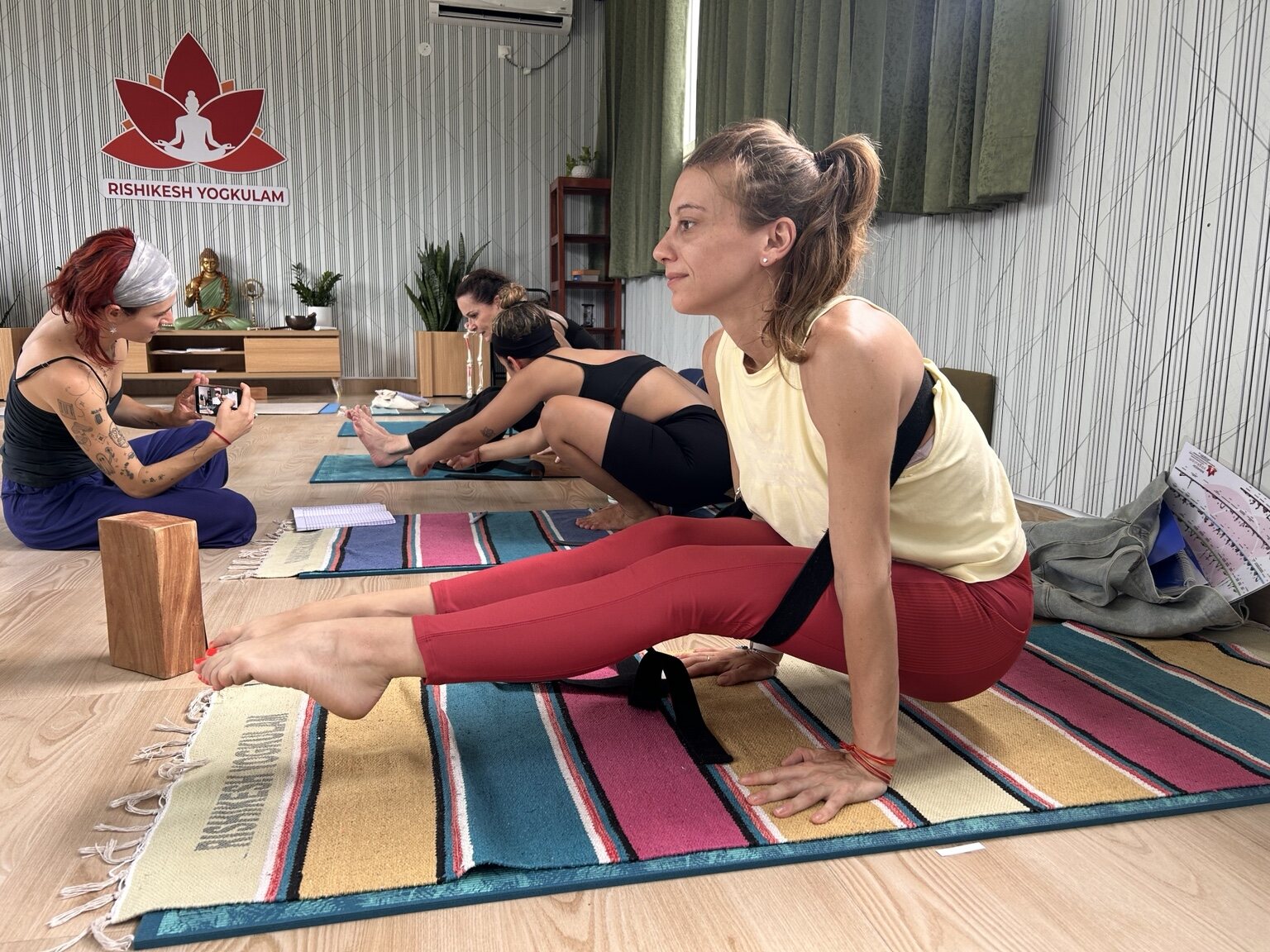
I completed a 200-hour hybrid teacher training with Rishikesh Yogkulam, including an in-person immersion in Rishikesh, India. It was not simply about learning how to teach postures. For the time I was there, I studied and lived yoga as a complete practice—immersing myself in its philosophy, traditions and everyday rhythm.
We explored anatomy and physiology, alignment and adjustment, Hatha yoga, Ashtanga Vinyasa, philosophy, meditation and pranayama. Each part helped me understand yoga beyond the physical practice and continues to shape the teacher I am becoming.
Teacher-training curriculum
What I studied at Rishikesh Yogkulam
These were the main subjects within my 200-hour course. Together, they helped me understand yoga as a physical, philosophical and mindful practice—not simply a series of postures.
Hatha yoga
Foundations of asana, balance, breath and a steady, considered practice.
Ashtanga Vinyasa
A structured and dynamic practice connecting movement, breath and focus.
Anatomy & physiology
Understanding how the body moves and functions within yoga practice.
Alignment & adjustment
Clear positioning and ways to offer safe, respectful guidance.
Yoga philosophy
The roots, ethics and meaning of yoga beyond the physical postures.
Meditation
Practices for concentration, observation and creating inner space.
Pranayama
Traditional breathing techniques and the relationship between breath and practice.
Qualification
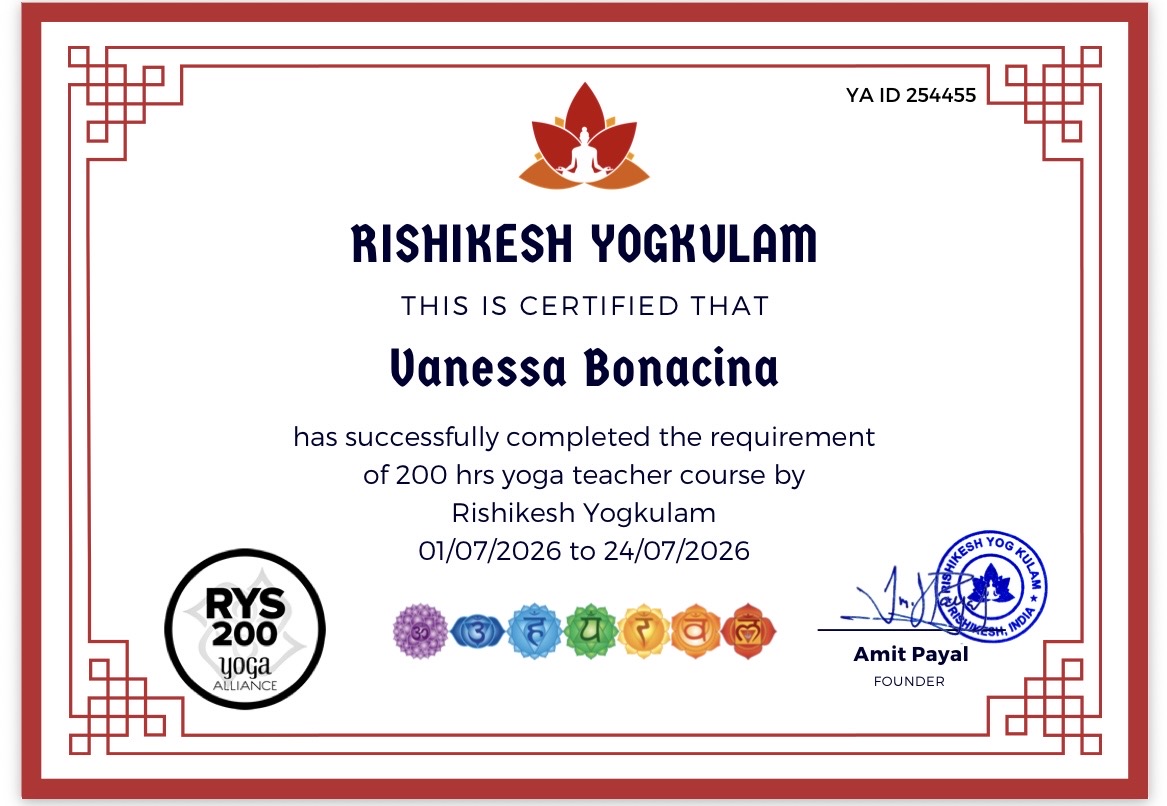
200-hour Yoga Teacher Training
Following my in-person immersion and completion of the remaining course work, I received my teaching certificate from Rishikesh Yogkulam in July 2026.
 View certificate ↗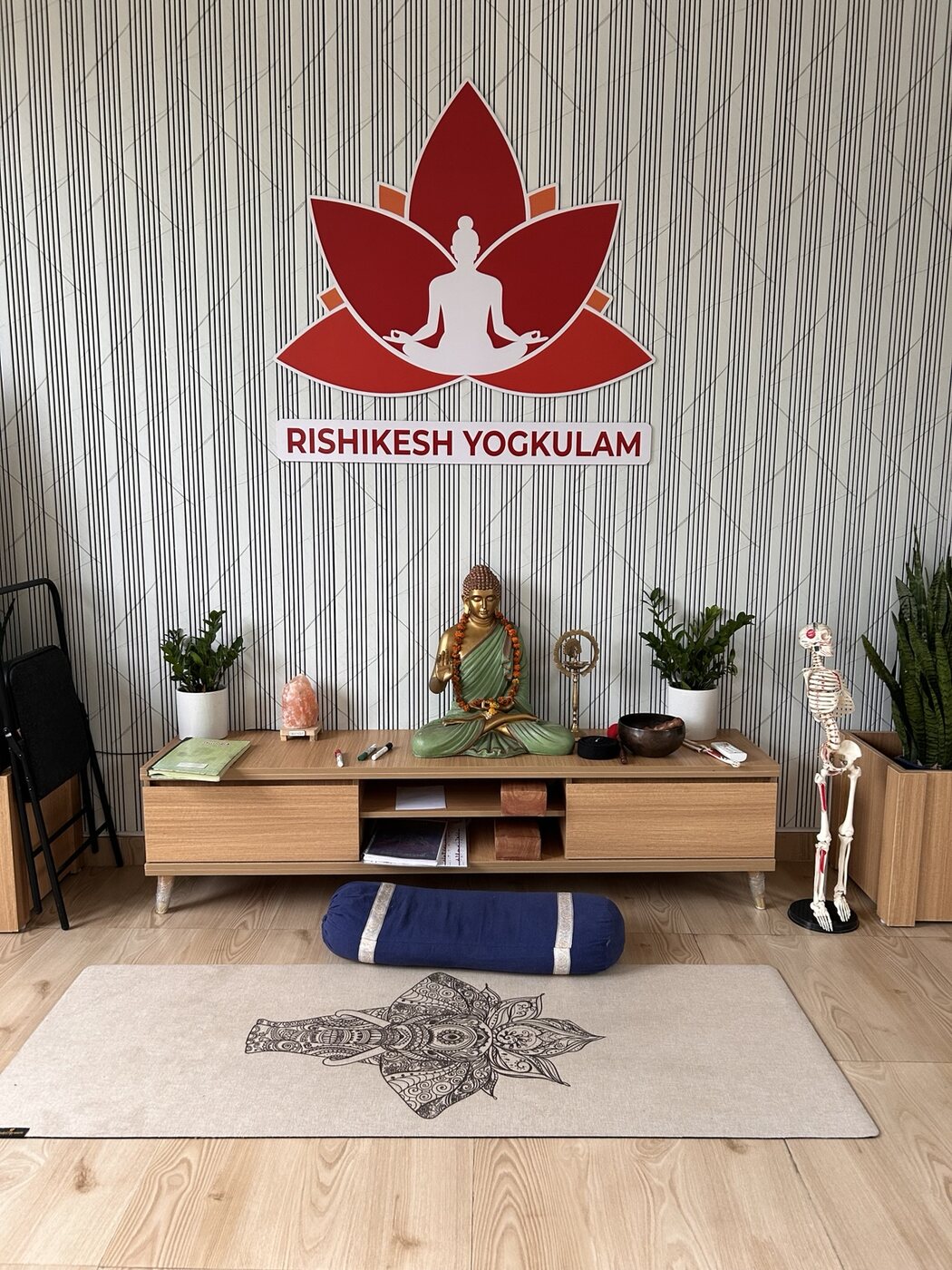
Living the practice
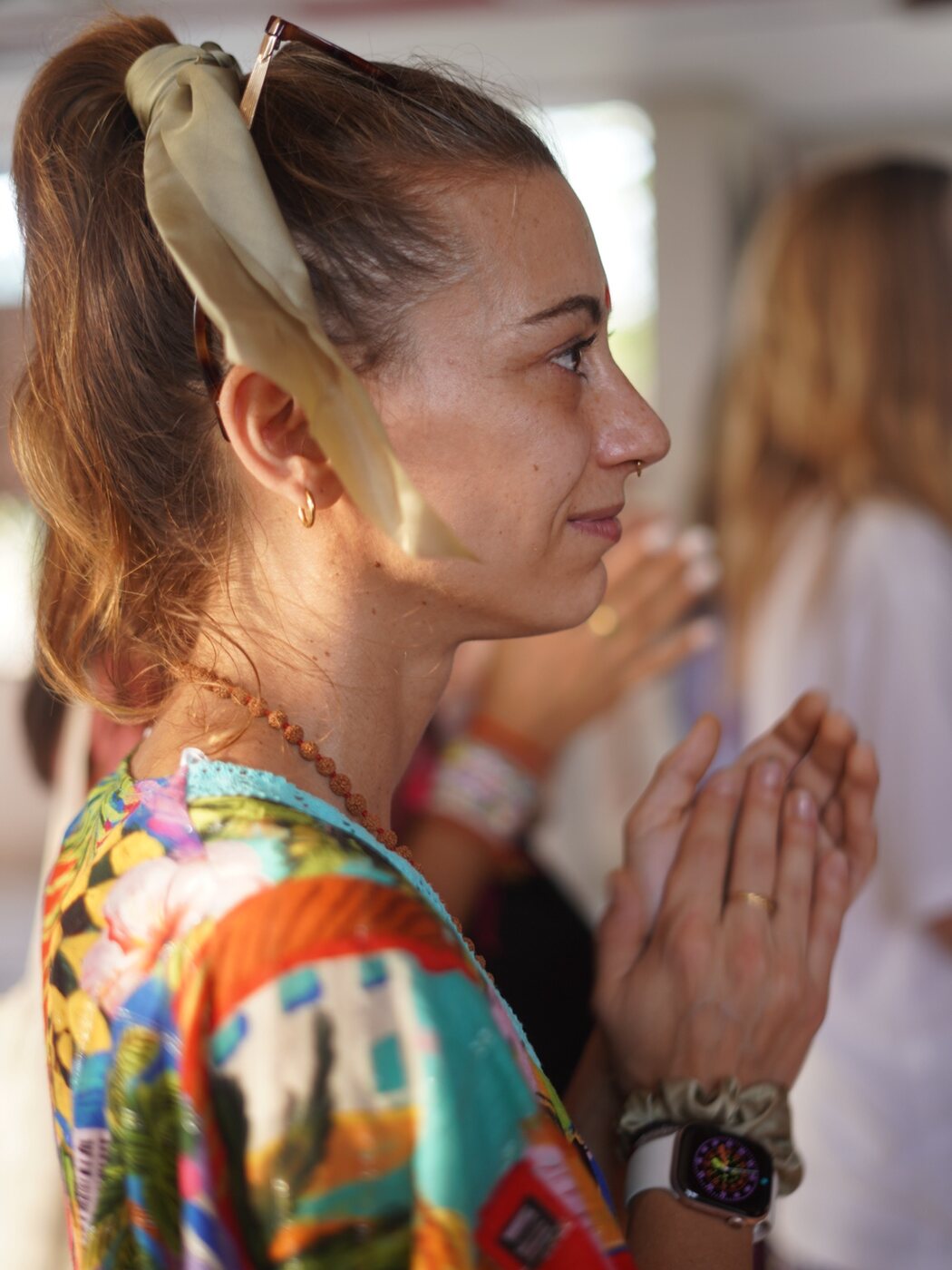
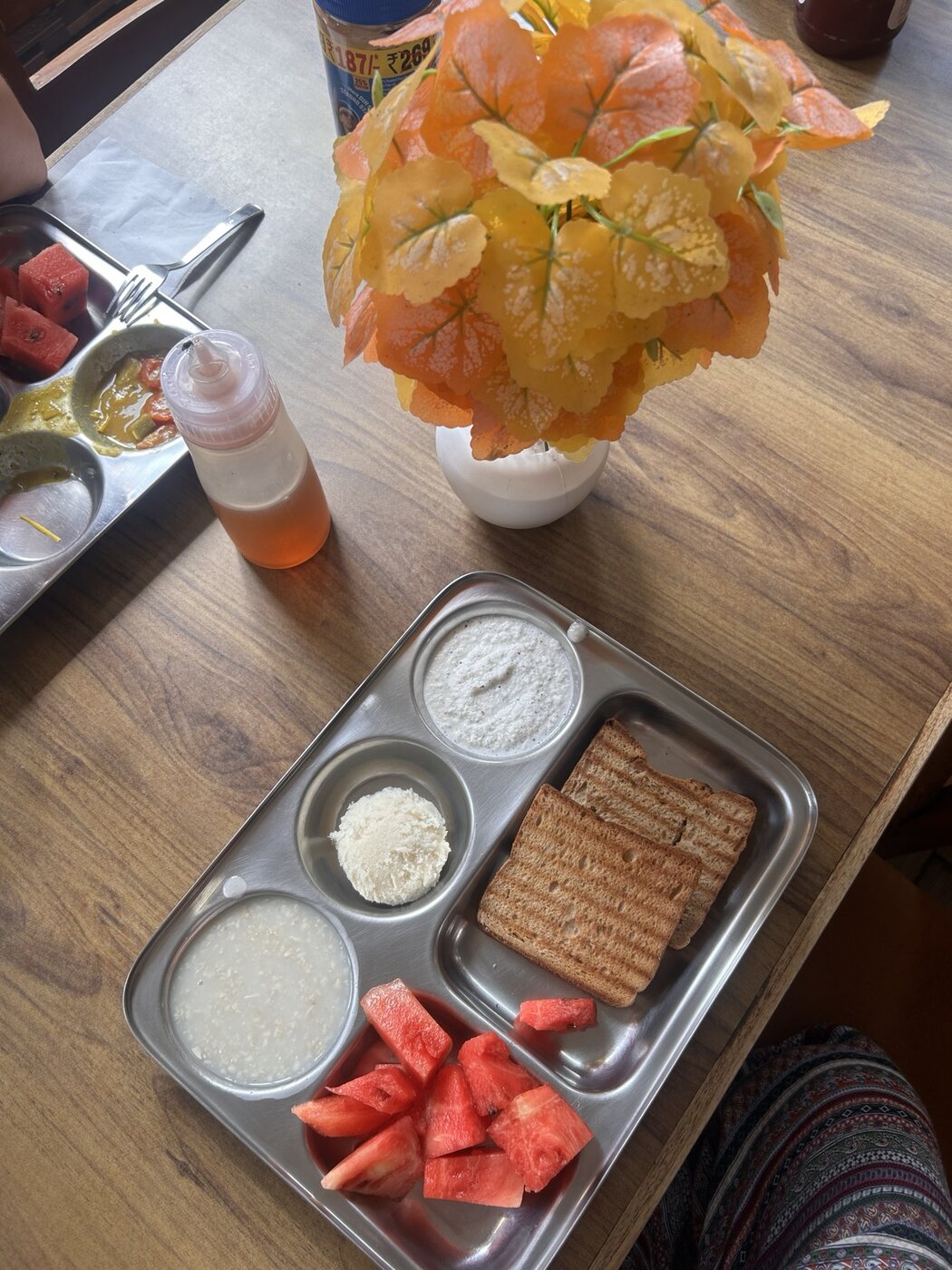
Our days began early and were filled with movement, study, breath and meditation. We ate simple vegetarian food and shared dinner in silence, using the meal itself as a practice in mindfulness. Early nights prepared us to meet the next full day of yoga.
Beyond the school, I explored temples, landscapes and a culture very different from my own. That difference is part of what I found so beautiful: learning across cultures while never forgetting—and always respecting—the Indian roots and foundations from which yoga comes.

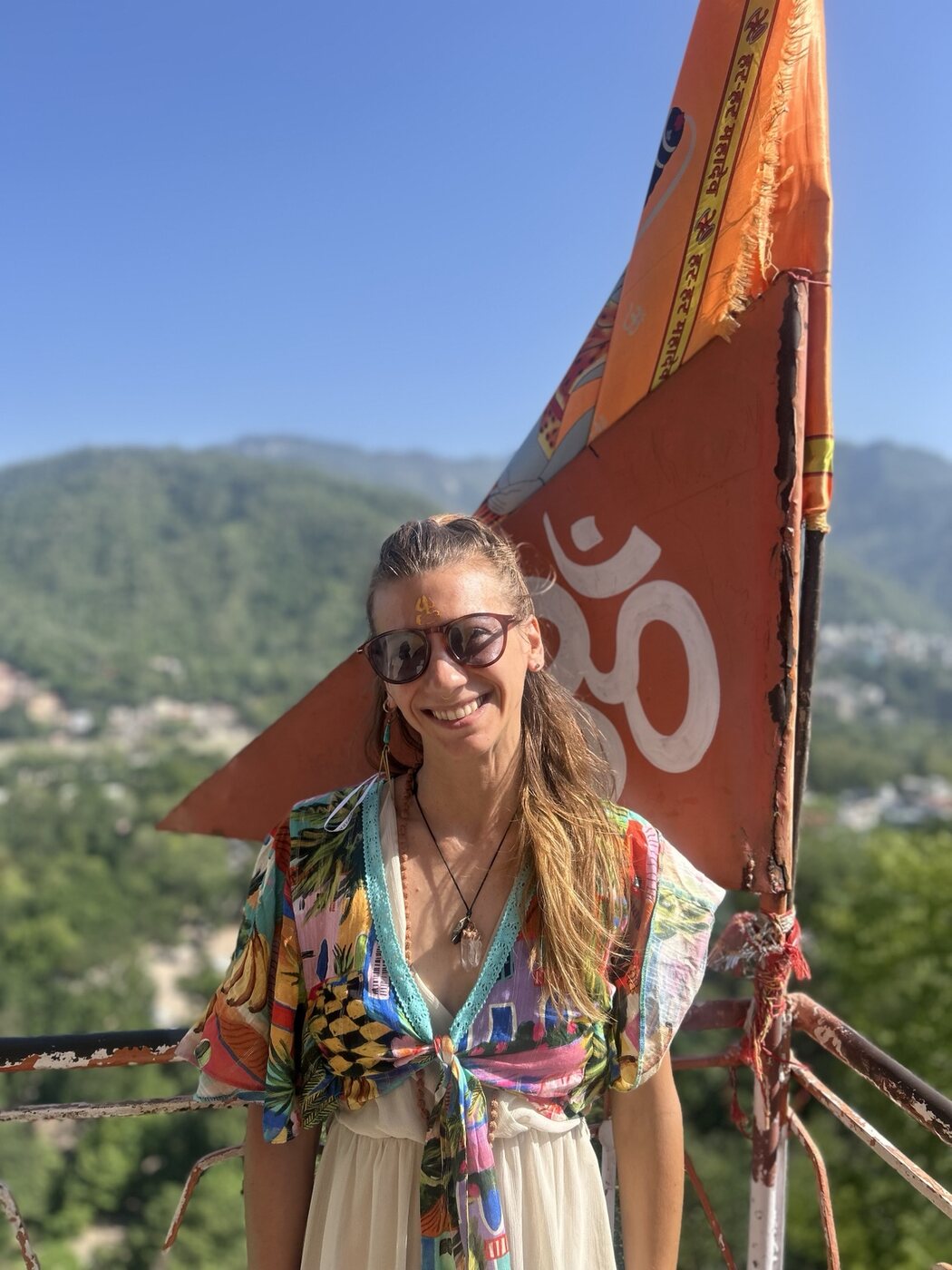
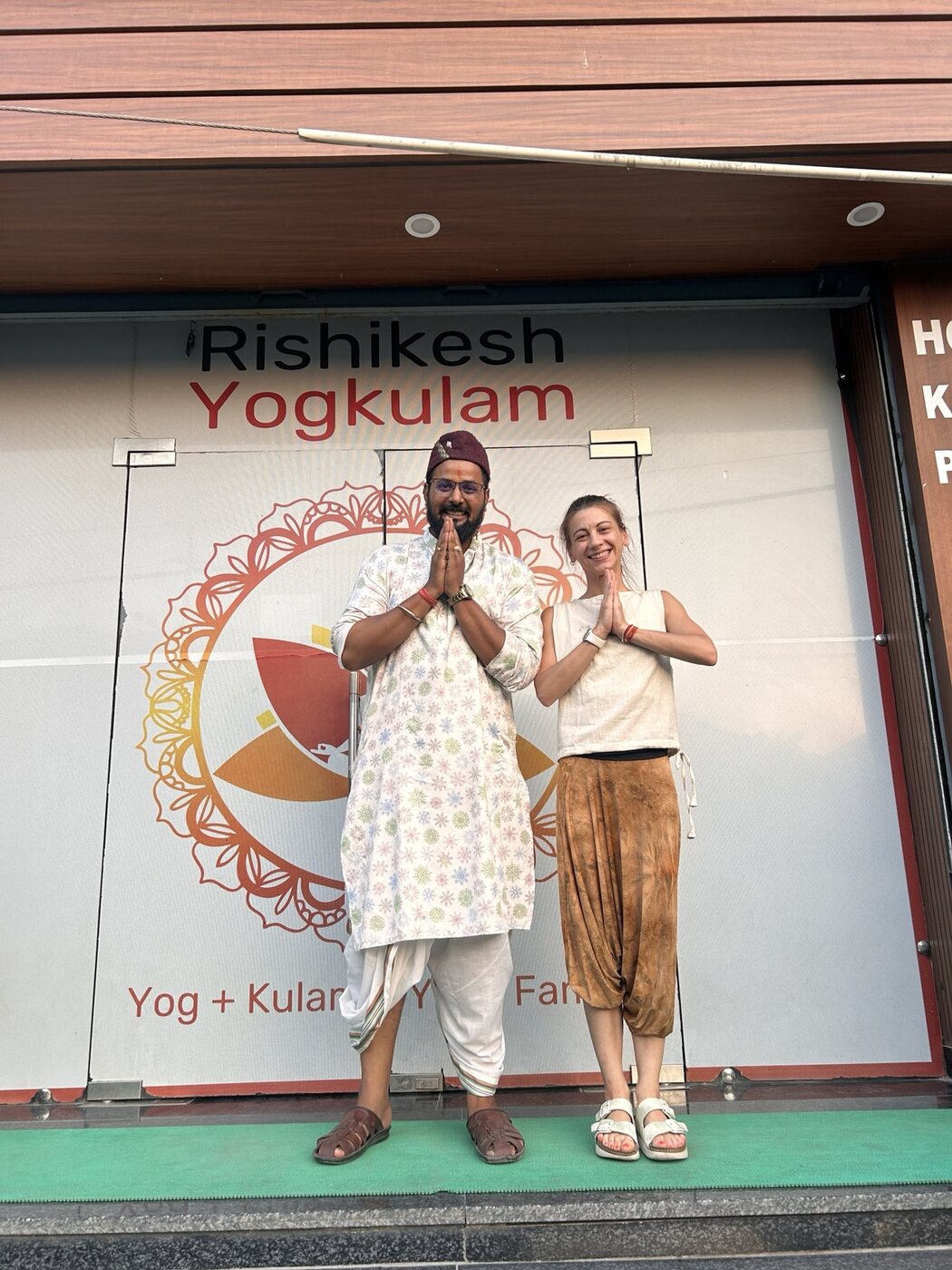
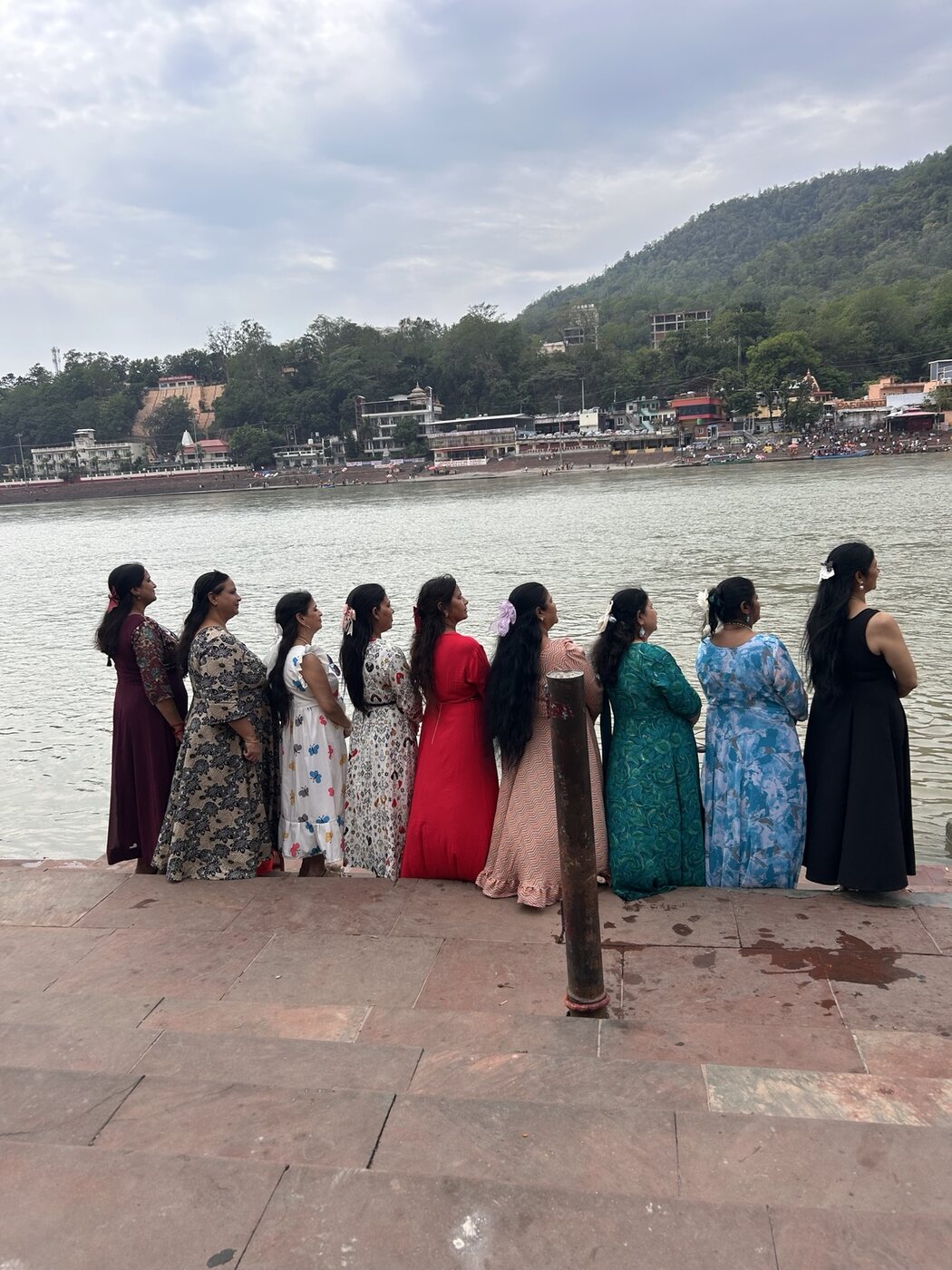
“For me, the beauty lies in bringing cultures into conversation while honouring where the foundations of yoga come from.”